Pricing

Three plans, built around how far you are committing.

A pilot to prove one workflow, a site plan to run on live alerting, and an estate plan for organisations standardising agents across several sites. Priced per site and per stream, so the figure scales with what the platform actually watches.

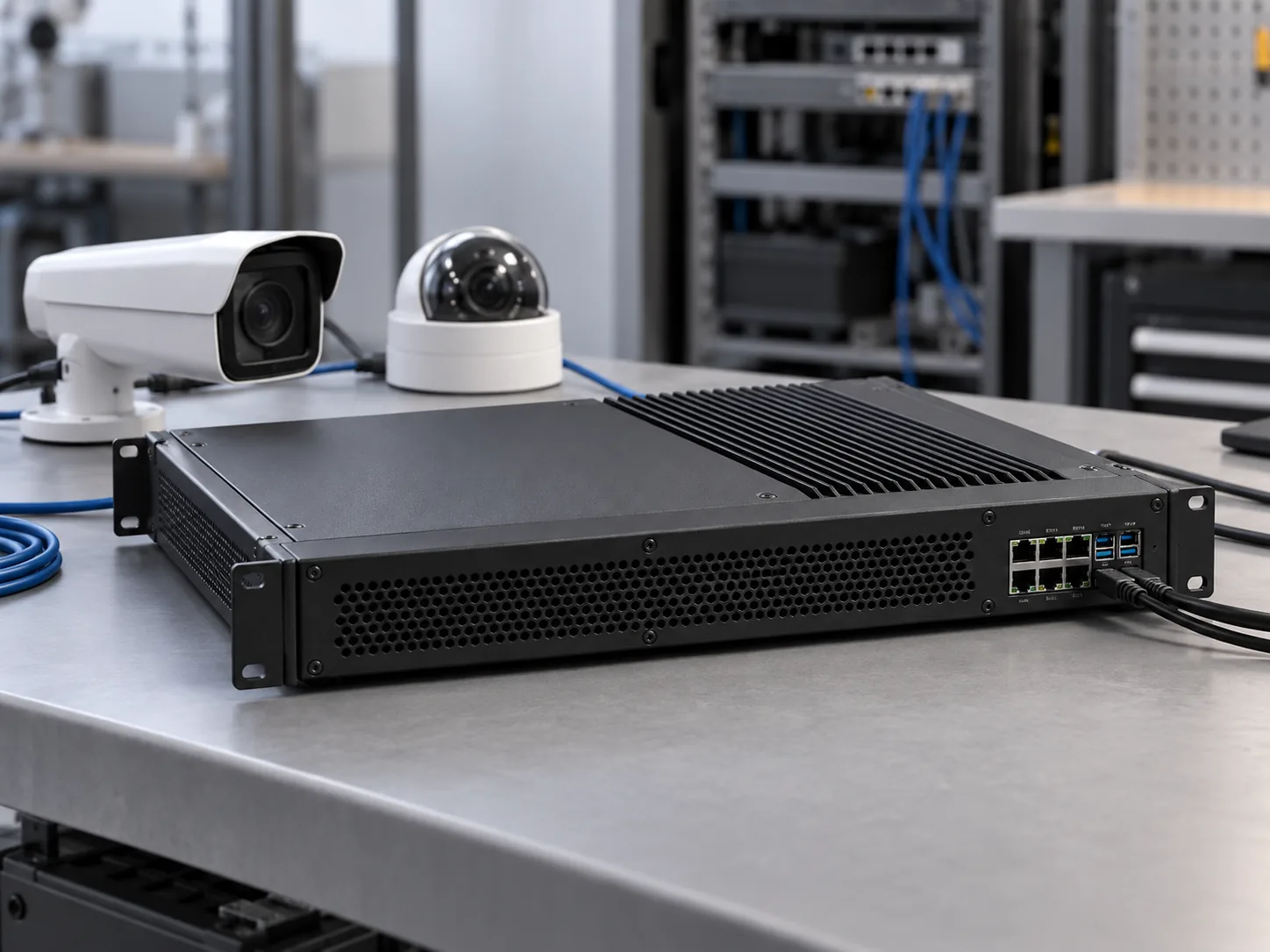
Compact edge-computing appliance with two existing IP camera styles on an industrial workbench.

Plans

What each plan covers.

Every plan includes agent configuration, the shadow period with event review, and outbound event delivery. What changes is scope: how many sites, how many streams, and how many jobs the platform takes on.

Pilot

Prove one workflow on one site before committing to a rollout.

$300 one-off, 90 days

Fixed scope for the term. Credited against your first year if you move to Site or Estate within 60 days of the pilot review.

  • One site, up to 8 camera streams
  • Up to 2 visual agents
  • Shadow period with weekly event review
  • Go-live session and escalation setup
  • Up to 3 outbound destinations
  • Edge appliance supplied for the pilot term
  • Event history stays yours afterwards
  • Single sign-on not included
  • Shared agent library not included

Start a pilot

Estate

Standardise the same agents across several sites, with local thresholds.

$500 per month, per site

Minimum five sites on one agreement. The first three sites are onboarded at no extra charge.

  • Everything in Site, across five sites or more
  • Up to 40 camera streams per site
  • Shared agent library across every site
  • Per-site thresholds and schedules
  • Up to 20 outbound destinations per site
  • Central administration and comparable reporting
  • Named escalation contact
  • Onboarding for the first three sites included
  • Commercial terms agreed once, applied per site

Talk to us about an estate

Indicative list pricing in US dollars, excluding tax, published so you can budget before a call. A written quote after a scoping session confirms the figure for your site and lists the assumptions it rests on.

Add-ons

Everything outside the three plans.

These are the only things quoted separately, and none of them is required to run the platform. Each is bought when a specific site needs it.

  • Additional camera streams

    Beyond the stream count included in your plan, charged for what the agents actually watch rather than for cameras owned.

    $45per stream, per month

  • Additional agents

    A pack of five further named jobs on cameras that are already onboarded. Configuration and tuning are included.

    $600per pack, per month

  • Edge appliance

    Hardware for sites that need inference to stay inside the site network. Supplied, configured and covered for the term of the agreement.

    from $2,400one-off, per site

  • Custom integration adapter

    For a destination system with a vendor-specific interface that cannot accept a JSON webhook. Scoped and agreed before any work starts.

    $3,500one-off, per destination

  • On-site commissioning

    Attendance at the site for camera view checks and rule sign-off, where remote configuration is not practical.

    Quotedper site, at cost

  • Annual billing

    Pay for ten months instead of twelve on any Site or Estate agreement. Applied automatically, not negotiated.

    Two months freeon annual terms

Compare

Every difference between the three plans.

Nothing is withheld from the lower plans as a sales tactic. The differences are scope, plus the two capabilities that only make sense once you run more than one site.

Plan comparison. Stream counts and agent counts are per site.
Included Pilot Site Estate
Sites covered 1 1 5 or more
Camera streams analysed Up to 8 Up to 24 Up to 40 per site
Visual agents Up to 2 Up to 5 Agreed per site
Term 90 days, fixed Monthly or annual Annual, per site
Agent configuration and tuning Included Included Included
Shadow period with event review Included Included Included
Live alerting and escalation paths After the review Included Included
Outbound destinations 3 10 20 per site
Role-based access and audit log Included Included Included
Single sign-on Not included Included Included
Retention configuration Pilot term only Per camera group Per camera group, per site
Shared agent library across sites Not included Not included Included
Per-site thresholds and schedules On the single site On the single site On every site
Named escalation contact Not included Not included Included
Event history after the term Yours to keep Yours to keep Yours to keep

Behind the figures

Why the plans are shaped this way.

The three plans exist so you can start without a procurement cycle. They are built from five variables, and a quote simply resolves those variables for your site.

  • Streams analysedCompute is the largest cost, so it is the largest line. A sub-stream costs less than a main stream.
  • Where inference runsEdge, your private cloud and our managed tenancy carry different hardware and operational costs.
  • How many agentsEach agent is a named job, and configuration and review scale with jobs rather than with cameras.
  • Retention and clip volumeA rule that fires weekly stores far less than one that fires every shift.
  • Integration workA JSON webhook is included in every plan. A vendor-specific interface is the adapter line above.

Scope sheet · Site plan

Distribution centre, single building and yard

Illustrative
  • Streams Dock apron, walkway and staging coverage 18 of 24 included streams used
  • Agents Dock flow · Walkway segregation · Blocked egress 3 of 5 included agents used
  • Runtime Edge appliance on the site network Video stays on site
  • Retention Event records and short event clips Windows agreed per camera group
  • Outbound Shift alerting, safety queue, site channel 3 of 10 destinations used
  • Add-ons None required at this scope No adapter or commissioning needed

Illustrative scope sheet. It shows what a quote is built from, not a quotation for a specific site.

No hidden lines

Things that are never a line item.

Vision projects acquire hidden costs easily. These are the ones deliberately kept inside the plans above.

Reading your existing cameras. There is no charge per camera brand, per protocol, or for connecting to hardware you already own. If a stream is published and reachable, analysing it is the product working as intended rather than an integration project. Reading a lower-resolution sub-stream instead of the main stream costs less, and the plans are priced so that choice stays yours.

Writing a rule. Configuring an agent is a working session with the person who owns the zone, not a professional services engagement. A site that wants to add an agent six months after go-live should be able to do it without a change order, which is why the rule interface is built for the operational owner rather than for a specialist.

Tuning after go-live. Thresholds move once real events arrive. That is the expected behaviour of a system being calibrated against a real site, not a support incident, and it is not billed as one.

Getting your data out. Event records are available through the API and can be pushed into your own systems as they are created. Exporting the history of what your site observed carries no fee, and that history stays yours whether or not you continue with the platform.

What is genuinely extra

Hardware for an edge deployment, an adapter for a destination system with a vendor-specific interface, and any work on the camera estate itself — repositioning, replacement or new cabling. Each is quoted separately, and only when a site actually needs it.

Commercial questions

What procurement asks.

The questions that come up once the technical evaluation is done and the numbers are on the table.

Book a live walkthrough
Are these prices firm?

They are list prices, published so you can budget before you speak to anyone. What you are invoiced is set out in a written quote after a scoping session, which confirms the stream count, the agents, the deployment model and any add-ons. That quote is the firm figure, and it lists the assumptions it rests on so a later change is visible rather than absorbed silently.

What counts as a stream?

One camera feed that an agent reads. That is not always the same as one camera: a camera can record at full resolution to your VMS while an agent reads its lower-resolution sub-stream, and a zone covered by four cameras might only need two of them read. You are charged for what the agents watch, which is usually fewer streams than the site has cameras.

What happens if we exceed the stream or agent count?

Nothing stops working. Additional streams are charged at the published per-stream rate, and additional agents in packs of five, both applied from the month they are added. You can also move up a plan, which is usually cheaper once you are consistently past the included counts — we will tell you when that point is reached rather than waiting for you to notice.

Is the pilot fee credited if we continue?

Yes. Move to a Site or Estate plan within 60 days of the pilot review and the pilot fee is credited against your first year. If the pilot concludes that the platform is not right for your site, the engagement ends there — you keep the event history and there is no annual commitment to unwind.

Do we have to buy hardware?

Only if you choose an edge deployment. A Site or Estate plan can run in a private cloud tenancy you already operate, which removes the appliance line entirely, or in a managed tenancy operated by us. Sites with an existing virtualisation platform often run the runtime on a virtual machine they already host, and that is a supported deployment rather than a workaround.

Can we change plan later?

Yes, at any renewal and usually mid-term when a site's scope grows. Moving from Site to Estate is the common direction once a second or third site wants the same agents, because the shared agent library is what makes a multi-site rollout cheaper than repeating a single-site one.

What is not included in any plan?

Cameras and the network they sit on, changes to the camera estate such as repositioning or new cabling, custom adapters for destination systems with vendor-specific interfaces, and on-site attendance where remote configuration is not practical. Each of those is quoted separately, and none of them is required to run the platform.

Start on the plan that matches your scope.

Bring the workflow and the cameras that cover it. We will confirm which plan fits and put the figure in writing with its assumptions attached.